Monday, 16 April 2012

International Timeshare Refund Action - New US visa scheme being debated

A new scheme which would allow foreign buyers easier access to the US is currently being debated by Congress.
International Timeshare Refund ActionThe Visa Improvement to Stimulate International Tourism to the United States of America (VISIT-USA) Act has several parts but includes the creation of a new non-immigrant visa, renewable every three years, for overseas investors who spend at least $500,000 to purchase single-family homes in the United States. In order to be eligible, those applying must spend at least $250,000 on a primary residence where they will reside for at least 180 days out of the year while paying taxes to the U.S.

The debate comes as a new act, allowing the US to take action against fraudulent timeshare companies, has just become legislation.

The Timeshare Resale Accountability Act will force companies to offer easier get out clauses for investors, and also to be more upfront about the terms of their products. Penalties will be applied to companies which fail to apply.
***

International Timeshare Refund Action

Our current UK Class Action claim is only for members of RCI Europe. This is because of legal corporate jurisdiction. RCI have many different companies operating under their banner throughout the World. For example, in the USA RCI trade as RCI - LLC which is an American company. They have recently made a settlement for their wrongdoings to their USA week’s owners and a claim by point’s owners is still ongoing.
We have recently appointed ITRA licensed agents who have opened offices in Singapore, South Africa and Australia who are pursuing claims and action where appropriate against RCI, resorts and management companies locally in much the same way of our European current operations.

Contact International Timeshare Refund Action for more information: www.itra.net

International Timeshare Refund Action

Florida Timeshare Resale Accountability Act Affords Consumer Protections

International Timeshare Refund Action

International Timeshare Refund Action (ITRA) is encouraged by the Florida Legislature’s passage of the Timeshare Resale Accountability Act, sponsored by Florida State Senator Andy Gardiner and Florida State Representative Eric Eisnaugle and supported by Florida Attorney General Pam Bondi.
“Florida has taken a giant step in providing consumer protection against fraudulent and deceptive business practices utilized by unsavory timeshare resellers,” said Howard Nusbaum, president and CEO of ARDA (American Resort Development Association). “The timeshare industry plays an increasingly significant role in Florida’s recovering economy as tourism returns and grows in the state”.
International Timeshare Refund ActionThe Timeshare Resale Accountability Act protects Florida consumers and helps put an end to deceptive marketing practices conducted by fraudulent timeshare resale companies that have been targeting consumers under the guise of offering a service to help sell their timeshare product. Specifically, timeshare owners will be given more information to make better decisions about purchasing timeshare resale services. For example, the legislation seeks greater transparency and will require, among other things, timeshare resale companies to disclose all terms and conditions of their business relationship with a consumer, provide for a right of rescission for consumers to cancel a contract for resale services, and impose penalties on companies who continue these deceptive practices.
Nearly 25 percent of all timeshare resorts in the United States are located in Florida, and these resorts represent a large and growing share of Florida’s tourism market. The Timeshare Resale Accountability Act is proactive legislation that is vital to ensuring the long-term health of a key sector of Florida’s tourism industry by protecting timeshare owners and legitimate businesses alike.
***

International Timeshare Refund Action has entered into dialogue with thousands of timeshare owners from which we have discovered a pattern of abuse, deception and even fraudulent issues that have been systematically perpetrated by many of the major timeshare industry players to the detriment of owners.

ITRA now has many thousands of UK claimants who are joining our NO WIN – NO FEE action group to claim compensation from RCI for irregularities including skimming and renting high season weeks from their Spacebank to the detriment of their members. This case is currently being rigorously pursued and is at an advanced stage with our legal team. Full details and an online pre qualification form may be found within our website. www.itra.net

International Timeshare Refund Action

Tuesday, 10 April 2012

International Timeshare Refund Action–Survey Reveals Brits Like to Return to Same Resort

The British are officially creatures of habit! According to a new survey by RCI, the timeshare exchange company, nearly two-thirds (65%) of Brits have returned to the same holiday resort more than once, revealing people like familiarity when it comes to their holidays. Surprisingly, more than one in ten (11%) of respondents said they had returned to the same resort six times or more!

International Timeshare Refund ActionThe main reason cited for returning to the same resort was that they had a good time there so they simply went back to have the same holiday (45%). Other reasons people stated were that they felt it met all their criteria (29%) and over a quarter (27%) said they didn’t see a need to go elsewhere if they had already found somewhere they liked. Respondents also stated they went back to the same place as they liked familiarity (14%) and found it less stressful knowing exactly what to expect where they are going (12%).

With over a third of people (36%) now taking fewer holidays than normal, it seems holidaymakers want to remove the risk of having a disappointing break. Returning to somewhere they have been before and enjoyed seems to have been given higher priority than having different experiences.

Sean Lowe, managing director of RCI, said: “We commissioned the research to gain insight into people's holiday habits and what is important is guaranteeing they have a good time. While travelling and trying different experiences suits some people, it’s apparent that ensuring a consistent quality and knowing what you’re buying is important to many which is why timeshare holidays and holiday exchange have remained popular.  Over a third (35%) of the people we surveyed who ‘repeat holiday’, said they would actually try a different holiday if they knew they would get a similar experience.”

Other holiday habits:

  • ‘Familiar fun’ – nearly half (43%) of people tended to do the same activities and 6% saying they did the exact same things
  • ‘Repeat eating’ – nearly a third (30%) of people surveyed said they went back to the same place to eat/drink
  • ‘Meal monotony’ – 18% of people said they will only eat food they are familiar with and 12% said they order the exact same meal
  • ‘Bay Watch’ – one in 20 (5%) people said they actually wait and then take the first opportunity to get their usual spot on the beach or by the pool!

* The survey was conducted by Online Opinions, and featured 1,000 adults who were polled online between 24-27 February 2012.

Whilst returning to the same resort every year may be a popular choice for any Brits, here at International Timeshare Refund Action (ITRA) we have found that owning a timeshare is not necessarily the ideal holiday solution that many timeshare owners had hoped.

We have discovered a pattern of abuse, deception and even fraudulent issues that have been systematically perpetrated by many of the major timeshare industry players to the detriment of owners. Many timeshare owners have found that rising maintenance fees and difficulty in obtaining suitable exchanges from companies like RCI have rendered their timeshare ownership virtually unusable and un-economical.

At International Timeshare Refund Action (ITRA) our objective is to support the consumer in timeshare disputes.

To find out more about the International Timeshare Refund Action visit our website www.itra.net

Monday, 9 April 2012

ITRA - Time Share Resale Scams Surging

Throughout the country, thousands of time-share owners are doing their utmost to rid themselves of properties that they no longer need or want. Unfortunately, for them there is an abundance of timeshare scams surging fees for paperwork and sales processing are taken upfront on the pretext of having buyers, which do not materialise. The result of course, is a no sale and the fee money paid is lost.

ITRA – Standing against Timeshare Fraud

An example of the scams taking place is shown when a Yuba City couple, Doug and Armelita Stoddard, bought a one-week timeshare in the Napa Valley some years ago. They ended up hardly using the property and trying to sell it online, they discovered a Florida based company who ‘found a buyer’ within weeks. However, they first had to send fees of $3,000 in two cashier checks, by overnight delivery.

Needless to say, after paying the checks, the company disappeared without a trace. This is a good example of the timeshare scams emerging repeatedly, designed for the sole purpose of taking gullible and desperate people for a financial ride.

Timeshare scams surge, when the economy is on a downturn, as by necessity there is a ready market to target. There are people who desperately needing money, want to dispose of their timeshare, as they can no longer afford the upkeep of them. They become easy targets for fraudsters, who take full advantage of the situation by making promises but failing to fulfil them.

Many of these so- called companies are not legitimate real estate brokers. Legally, a realtor requires to be licensed in the state in which the timeshare is located.

Claiming by phone or email to have potential buyers, either local or foreign, they get your attention. The next step is asking for upfront money for various expenses. Be aware, and react carefully to what is offered before parting with your cash, in order to avoid being scammed.

Source: Inaudit to read or comment on the original article


ITRA – on your side

ITRAAt ITRA our objective is to support the consumer in timeshare disputes. We have discovered a pattern of abuse, deception and even fraudulent issues that have been systematically perpetrated by many of the major timeshare industry players to the detriment of owners.

If you feel you have been a victim of a similar scam contact us now.

To find out more about the International Timeshare Refund Action visit our website

Tuesday, 27 March 2012

ITRA - Timeshare fraud victims targeted by double-dip scam

Fraudsters are offering to secure compensation for timeshare owners desperate to escape a holiday property contract – in return for a further fee.

ITRA – Righting the wrongs with Timeshare

Timeshare owners who have fallen victim to fraudsters offering to sell their contracts in exchange for a fee are being targeted a second time by the same crooks promising they can obtain compensation – for a further fee of at least £500.

Timeshares, also known as "fractional ownership", became popular in the UK in the 1980s when waves of Brits snapped up shares in holiday apartments at European coastal resorts, typically in Spain and Portugal. According to the latest , Britons and the Irish form the largest market in Europe, with 589,653 timeshare owners out of a European total of 1.5 million.
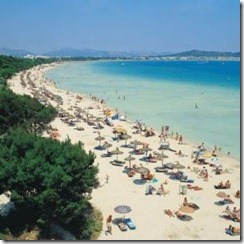
ITRA - Holiday resorts like Tenerife are particularly targetedPeople buy a share in the property for a set number of weeks each year, usually paying a one-off lump sum. In return they get the right to use their annual weeks in the apartment, either for a fixed number of years or, more commonly, "in perpetuity". On top of the lump sum, timeshare owners must pay annual maintenance charges, which often increase substantially each year.

Contracts written in perpetuity are difficult to break. Many retired timeshare owners are locked into paying high annual fees for an entitlement to holiday properties they do not want. In many cases, these are passed on to family members when the original purchaser dies.

The problem is exacerbated because timeshare contracts are notoriously hard to sell. The company that sold the timeshare may agree to buy it back, or a resale company might find a new buyer – but the price owners get is usually much lower than the one they paid. Worse, bogus resale companies are prolific, offering to find a buyer if owners give them an upfront payment, then disappearing with the cash.

This happened to Craig Williams and his wife Jacquie from Kinross, who have a timeshare at the Moness resort in Aberfeldy, Perthshire. The couple were cheated out of £500 in 2006 by a company called Yacht Trading. It failed to find a buyer for the Williams's timeshare and never paid back their £500. Yacht Trading was wound up in the high court in early 2008, following a government investigation.

Recently the Williams were again contacted by a timeshare-related company, this time called Asset Accountancy Services (AAS). The company claimed it was in a position to retrieve the money the couple had lost in the Yacht Trading scam.

"The salesman told us there was a £4.5m pot of money available to compensate people who had been conned and promised us £2,717.10, which was a lot more than we had lost," Williams said.

"I instantly thought it must be a scam, even though the guy on the phone was professional and gave us his company registration number to reassure us. He also gave my wife the number of the 'Legal Time Share Advisory Bureau' in Gateshead, which he said was some kind of government body for timeshare organisations. But when we rang it later, the woman on the line did not sound very authentic."

The Legal Time Share Advisory Bureau does not appear to have any kind of presence on the internet and when AAS called back, Williams challenged the salesman. "The man said it wouldn't have a website because it was a government body." He then asked the couple to buy £500 in vouchers from online payment service Ukash to cover administration fees, and to call the claims management company back with the voucher codes. Williams suspected they would never see the £500 again if they proceeded.

"At that point I said it all sounded like another scam. He asked who I was so I pretended I was a trading standards officer, at which point he began getting aggressive, especially when I wouldn't give him my name. He must have figured it out because at the end of the call he said: 'You're nothing but a twat. We've got your wife's number now so we'll make sure she gets lots of calls.' It was very threatening."

David Hunter, chief executive of Ukash, said: "We're aware and clearly concerned about fraudulent activity of this type but, for us it's impossible to differentiate between genuine and malicious transactions."

He said if consumers reported a fraudulent transaction to Ukash within eight hours, there was a 50% chance they could stop it going through. He advised people to check the for more safety advice.

Double-scamming of victims is nothing new. In early March we reported on victims of telephone fraudsters selling bogus energy-saving devices, who were being targeted by the same people claiming to offer compensation. Trading standards warned that the bogus "claims management companies" were offering to secure up to £3,000 in compensation in return for an initial outlay of £300.

Asset Accountancy Services gives an estate in Colchester as its address, but according to Companies House the company has changed premises five times since November 2011. When the Observer tried to get in touch, the phone line was dead.

A spokesman for the (Tatoc), a consumer association that can help with resales and timeshare problems, said Asset Accountancy was a name that had only recently cropped up. "We've had a few calls about this one now, but all these firms are completely bogus and consumers need to stay away," he said.

"They start off asking for £350 to £500 upfront, but then they will come back and claim they have retrieved £20,000 of compensation for a consumer before demanding £3,000 to £4,000 in order to 'pay the tax'. This is where the real sting takes place. "These tend to be companies who were involved in the original reselling scam, suddenly popping up as a legal recovery specialist a few years later – that's how they have their list of potential targets."

A new , which all member states had to adopt by February 2011, bans resale companies from levying charges until the actual sale has taken place or the contract has been otherwise terminated. This will help put a stop to widespread fraudulent activity from resale predators, but will do little to prevent bogus companies from contacting previous victims.

The directive also includes rules that might help protect buyers and their families being lumbered with timeshare contracts indefinitely. For example, traders must provide comprehensive pre-contractual information so consumers can make an informed choice prior to being bound by any contract, and there is a universal 14-day cooling-off period during which consumers can pull out of the deal at no cost.

Grace Kerr, a property lawyer at Birketts solicitors, said: "It's very difficult to break a timeshare contract written in perpetuity. The new EU directive will help as it offers greater protection for new purchasers, but existing owners have few options. They can try selling to someone else or handing back ownership to the timeshare organisation (some are better than others and will allow this, usually if the owner is over 75 or unable to use their timeshare), or renting their weeks to someone else, which might help ease the burden.

"Failing that, they could walk away and simply stop paying the fees, but this would be breach of contract and they would probably face legal action. That only leaves the option of claiming misrepresentation, if they can prove they were told the purchase was something it is not, such as an investment, which might work. If the timeshare property is in the UK, the Trading Standards Institute might be able to help."

Tatoc warns against directly contacting any company that promises to cancel your timeshare agreements at low cost. It advises timeshare owners to call its own helpline (Tel 0845 230 2430) to check first. says anyone thinking of selling their timeshare should talk to one of its advisers, and also recommends Tatoc.

Craig Williams said that he had contacted us to ensure that no vulnerable people fall victim to the double-dip scam. "If I can help stop one granny from being scammed out of her money, it will be worth telling my story," he said. "I wonder how many people got caught out on the day we were cold-called."

Source: Guardian

To comment on the original article


AT ITRA Our Aim Is?

Our objective is to support the consumer in timeshare disputes. We have discovered a pattern of abuse, deception and even fraudulent issues that have been systematically perpetrated by many of the major timeshare industry players to the detriment of owners.

To find out more about the International Timeshare Refund Action visit our website

ITRA

Tuesday, 20 March 2012

International Timeshare Refund Action (ITRA) – Timeshare Law in Spain

Timeshare Law in Spain

Timeshare lawAny contract detailing the rights of an individual to use one or more property in Spain during a specific or specifiable period during the year is covered under this law, wherever and whenever the place and date of contracting.

Timeshare rights are those which give to the holder the right to use and enjoy an independent dwelling, with exclusive character, for a specific period of time within the year. It includes the necessary furniture for this use and any complementary services & facilities. It is regulated in Spain by a Law dated 1998. 

The Spanish regulation considers timeshare as a type of seasonal rental. Crucially, the holder of timeshare rights does not acquire ownership rights, but the right to use the property for a specific period of time only. The duration of these rights is not indefinite; the developers of these type of complexes need to specify the period for the enjoyment of these rights which s always should be between 3-50 years. Outright ownership of the property remains the developers’.

Because the developer retains ownership, they can always sell ownership rights with the limitations derived from the existence of the other person’s use and enjoyment rights on the sold unit, which will remain for the contracted period.

Provision 1.4 of Law 42/1998 prohibited the denomination of those rights as “multiownership" or any other way containing the word “ownership", “ owner” or "property".

For this reason, any contract signed in Spain containing the word “ownership or property" (propiedad) is null and void and you have the right to a refund of any money paid, plus legal interest.

In Spain, the description that was finally chosen, as most appropriate, descriptive and loyal to Law is "derecho de aprovechamiento por turno", which literally means “right to use and enjoyment in shifts"

Publicity or promotion of these type of developments can never contain the word "propiedad"(property or ownership)

The timeshare scheme can only be formed in a building, property or set of them which are architecturally individual or separated.  All independent units included in it, should be subject to the scheme. The building must have at least 10 units. 

The same building can be subject at times to different tourist operations, provided that the rights of timeshare accommodations fall on concrete and specific periods and units. 

The annual use/enjoyment period can never be less than 7 continuous days. In every case, within the same scheme, shifts should all have the same length. The units will also be reserved for repairs, cleaning or other common purposes for a period of time which shall not be inferior to seven days for each unit subject to the regime.

Main characteristics of timeshare rights in Spain are:

· It is a limited ownership right (enjoyment): two or more different people hold rights on the same property (the owners and the holders of enjoyment rights).

· It is immediate, as, in shifts, it gives to its holder a direct enjoyment of the property.

· It is entered in the Land Registry, which gives to its holder a complete legal safety within the Spanish legal system. Obviously timeshare rights need to be transmitted by Notary deeds for their entry into the Land Registry.

· It can be transmitted to others either in life or by death. They are part of the property trade.

Together with desisting from or cancelling the timeshare contract, possibilities that are subject to a shorter deadline, there is the possibility, initially sine die (without deadline) to apply for the nullity of the contract.

In what cases?

· When timeshare rights are transmitted disregarding the imperative Law which regulates them.

· When the transmission of timeshare rights are made before the scheme is actually constituted

· When there is a lack of veracity of information provided to the buyer.

The action for the refund of amounts linked to the nullity has a 15 years deadline.

There are numerous precedents in Spanish Courts for the nullity and refund of money if you were sold under the term "propiedad" (property).

The important issue of adaptation

From January 1999 any preexisting timeshare regime needs to adapt to this Law. If this has not happened, any holder of timeshare rights will be able to request a Judge to compel the developer to do so.

Adaptation will always require a Notary deed and proper registration in the Land Registry.

Adaptation will respect the nature of rights which were transmitted by virtue of the old private contract. If ownership was transmitted, this is how it will have to be registered after approval of a simple majority of Community of owners.

All old contracts will have a time limit of 50 years unless parties have agreed otherwise or parties mutually or freely agree in the adaptation deed on a different definitive or non-definitive period.

If the owner of the development does not comply with the obligation of adapting the regime to this new regulation, the holder of timeshare rights will have rights to cancel the contract with effective devolution of amounts and compensation of damages.

ITRA are now pursuing the coordination of a claim to the courts on behalf of timeshare owners who can justify due cause for full compensation, distress and damages on the grounds that their timeshare purchase was not of merchandisable quality.

To find out more about the International Timeshare Refund Action visit our website www.itra.net

Friday, 16 March 2012

ITRA - Timeshare Class Action

Have you been a victim of a Timeshare resale scam?

ITRA - Timeshare Class Action versus Individual Timeshare Lawsuit

There are many reported cases of deception, abuse, and even fraudulent activities by Timeshare industry players. Other Timeshare complaints that have been reported include exorbitant interest rates by finance companies that are promoted by marketers, maintenance fees that are always increasing, transfer and disposal of points and weeks problems, and problems obtaining selected balance exchanges. If you have been a victim, you could get regal redress. Other than fighting Timeshare fraud, Timeshare class action will help you get a Timeshare refund.

You could go for an individual Timeshare lawsuit or Timeshare class action. The greatest advantage of an individual lawsuit is the fact that you get to set your own terms, but going for Timeshare class action is more advantageous.

One of the greatest benefits of class action is the fact that you will not need to pay anything. Such companies as ITRA (international timeshare refund action) and Owners Action are dedicated to helping people action in Timeshare-related cases. Companies like ITRA work on a no-win no-pay basis, meaning you will only pay a fraction of what you win and nothing if you lose.

The company (ITRA) will be responsible for all the research and the cost of gathering the necessary evidence. The fact that the lawyer has to win to get paid means your lawyer is more likely to give 100% with class action. This is indeed the best option if the Timeshare fraud has taken all your disposable money.

You get greater judicial efficiency with class action. The fact that a number of people will only need one judge means the court system will appreciate such a case more. In individual lawsuits, plaintiffs who file early get more than the ones who file later. This is not a problem with class action. Class action is the best option if your case is not strong enough to win. Your case will be helped by the other cases.

With ITRA you will get the very best lawyers with a Timeshare class action suit. This is not possible with an individual suit since good lawyers are expensive. A class action lawsuit gives you unparalleled convenience. You will not be required to be in court every day, meaning the lawsuit will not affect your business/job or your social life. The legal system puts limitations on the period before which individual actions are to be filed, but the period is extended in class action suits. Timeshare players are more likely to offer compensation when faced with class actions.


ITRA

ITRA

Our objective is to support the consumer in timeshare disputes. We have discovered a pattern of abuse, deception and even fraudulent issues that have been systematically perpetrated by many of the major timeshare industry players to the detriment of owners.

If you feel you have fallen foul of any of these Timeshare companies and want a solution? Contact ITRA today.

ITRA International Timeshare Refund Action

To find out more about the International Timeshare Refund Action visit our website www.itra.net